
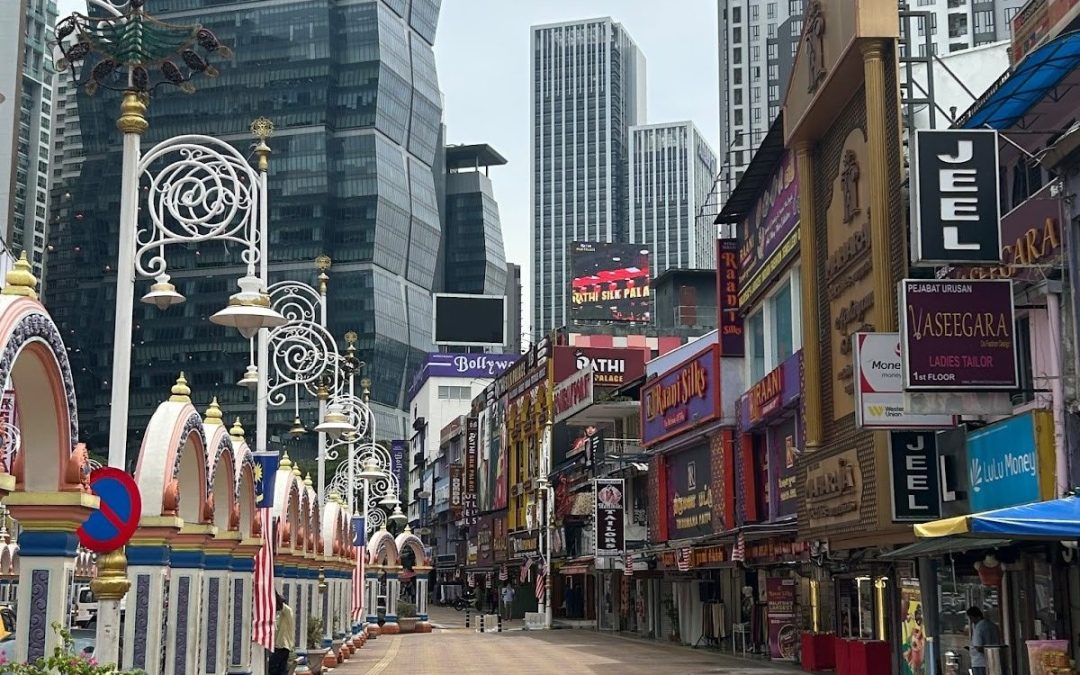
I thoroughly enjoyed the 2025 Honors trip to Malaysia and Singapore! My 2027 Honors cohort visited these two countries, which demonstrate an immense diversity of cultures on every street. With such a great deal to do and see, I knew I needed to determine what sites I wanted to visit so I didn’t have to take that 16-hour flight again! One thing I knew starting out on this journey to Asia was that I wanted to visit every single Little India in every city we stopped in. It may sound like a challenging plan–and it sure was at times–but I had my mind set on seeing each one I possibly could.
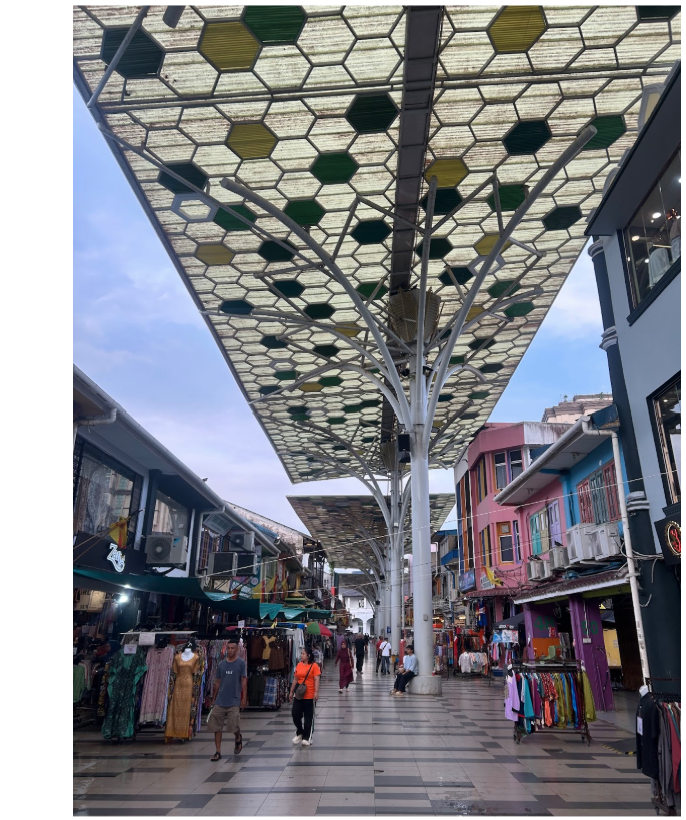
In Malaysia, I was able to visit Little India neighborhoods in Sarawak (Kuching), Penang, and Kuala Lumpur (KL). The previous summer, I visited India, and was able to immediately make connections between the 1,269,219 square mile country, and the culture I could see in a couple of streets. I felt this surprising shift from one street to the next, as I walked a block over from a Chinatown, or when turning left from an Armenian Street. Entering a Little India in Malaysia felt like stepping into a portal to India. The streets are filled with restaurants and vegetable stands, Indian restaurants every few feet. I thought I had seen many Indian people in other areas of Malaysia, but Little India was vastly different. There were always crowds of Indian men and women attending to their daily lives, and I almost forgot that I could walk a few feet away, down another street, and it would be like traveling to another country in a few minutes!
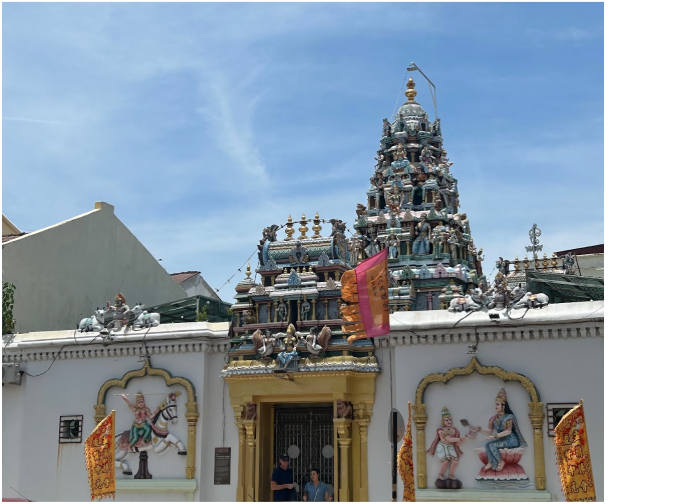
At the end of our three-week trip, feeling a bit tired but still adamant about my goal, I went to the last Little India on the list, in Singapore. The transportation system in Singapore is fascinating to use and so consistent that the trains are not often crowded. When heading to Little India, however, that was the most crowded station I had ever seen. Even when leaving the station, I saw at least 30 Indian people sitting outside and either talking or eating their meals. The area was bigger than other Little India neighborhoods I had seen thus far, covering several streets. In actuality, Singapore does not have a larger population of Indians, and my perspective was simply because of how much smaller Singapore is (284.1 mi2) compared to Malaysia (127,750mi2). There seemed to be a greater Indian population because Indians took up a larger space within the island.
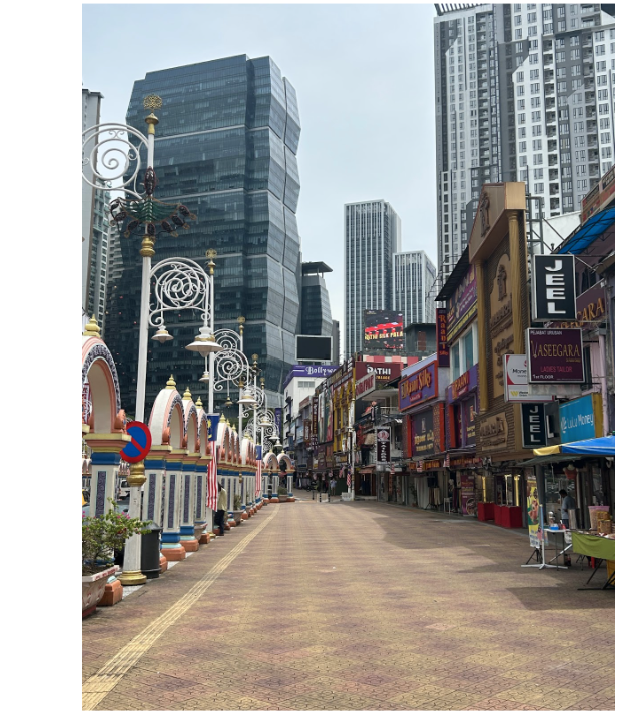
In both countries, it was very fascinating to see how the diversity of Malaysia and Singapore has influenced Indian culture. It was a unique experience to try a variety of Indian noodles, which are not a common food in traditional Indian culture. A Chinatown was often near Little India neighborhoods, and it was the clear proximity that led to this influence. I did not just see the fusion of food, but the cultural effect on buildings as well. The architecture of each Little India matched the structural design of the surrounding buildings. I think this was interesting because while the atmosphere made the street seem like you were in India, you could tell by the tall, narrow buildings that you were in Malaysia, or that the more controlled streets indicated that you were in Singapore.
I was also amazed when seeing the culture of Little India neighborhoods within Malaysia and Singapore; how Indian culture has been able to expand and yet remains connected to themother country. In India, and in my family’s culture, the men tend to wear more Western clothing, while the women wear saris and salwar kameez more often. When I visited India, I noticed that the older generation may wear traditional clothes, but the younger generations were almost always in Western clothing. I was expecting the same fashion in Malaysia and Singapore, but was shocked to see women wearing their traditional clothing. It seems as though westernization has not caught up to these Little India neighborhoods. Another thought occurred to me as well. On the trip, our cohort learned about the large elderly population as the younger generation emigrates to other countries. When considering the reasoning behind more traditional styles being worn, I realized that I had noticed the outfits of many older women, and truthfully, did not see many youths at all! Both Malaysia and Singapore have declining birth rates and a growing elderly population. Younger generations are more likely to be influenced by other cultures through the media, and it was interesting to see up close how having a senior majority reduces Western influence. It is important to note, however, that not every Indian person lives in Little India, and dressing up to go to this area may be part of the tourist experience.
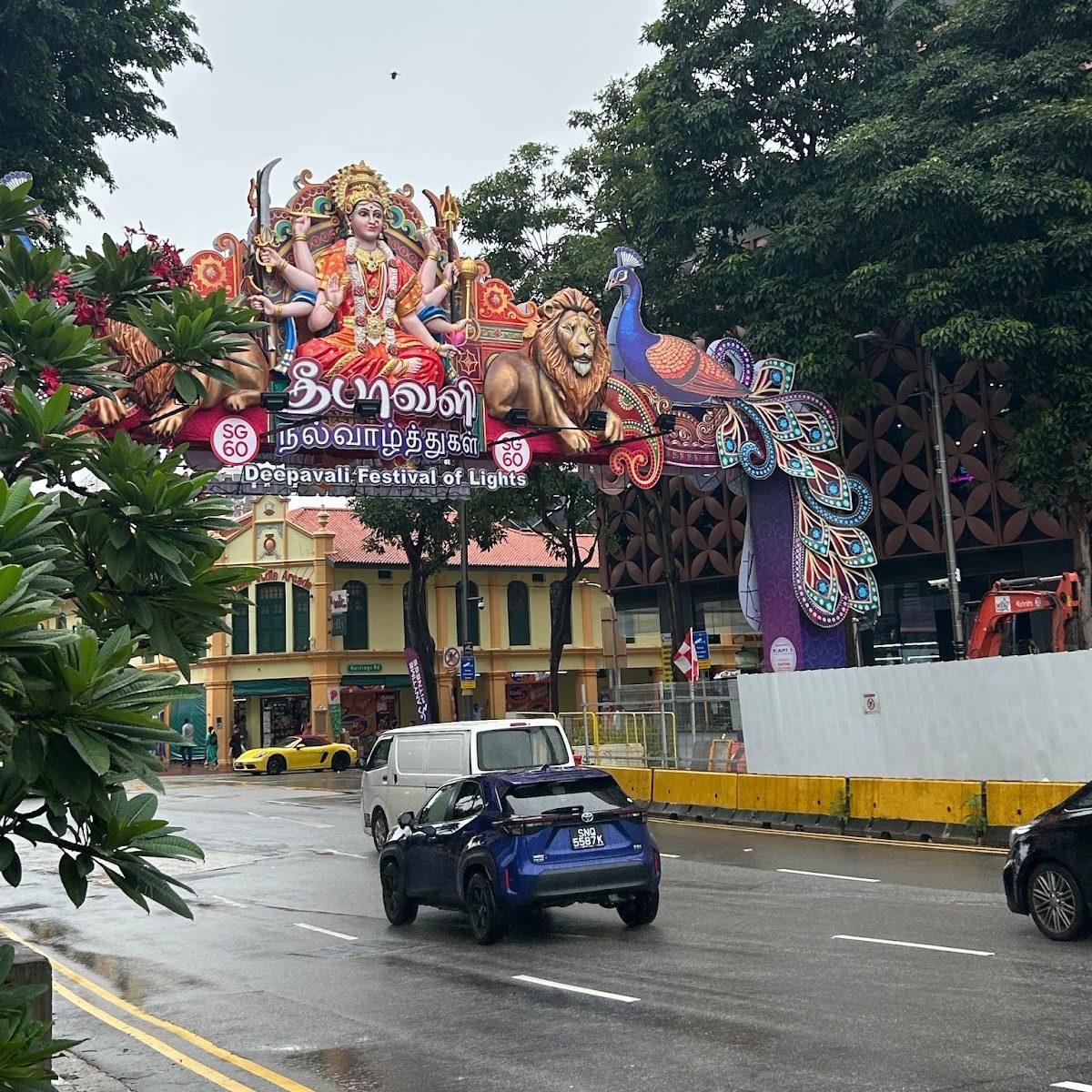
Overall, being able to visit the three Little India neighborhoods in Malaysia and the one in Singapore helped me learn about how culture is carried to different countries and how it is influenced by surrounding ethnic groups and cultures. I was grateful to be able to go on the Honors trip and learn about other countries in Asia, and being able to compare it to my experience in India. I thoroughly enjoyed the opportunity to learn to expand my thinking and talk with my classmates about our observations. This insightfulness has helped me analyze my experience in order to fully consider the context and the knowledge I have as a traveler. I am thrilled that I achieved my goal of visiting these Little India neighborhoods, and it will surely be a while before I take a 16-hour flight again!
*saris–for women, a traditional Indian outfit, a cloth wrapped around with a top
salwar kameez–for women, traditional Indian top and pants
– Shani Taylor, Class of 2026: Psychology